
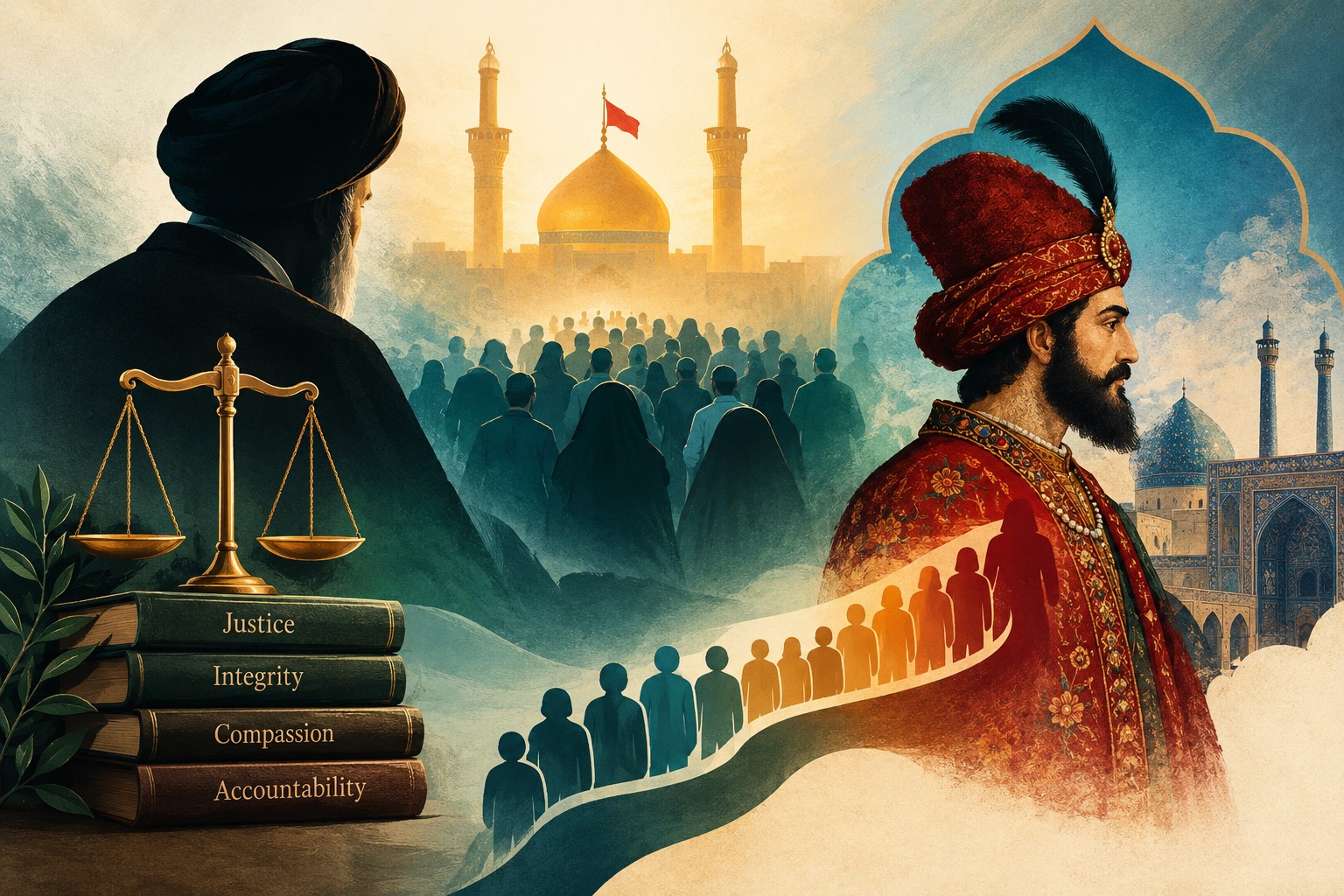
The Ethics of Shia Rulers and Its Impact on People's Inclination toward Shi'ism (From the Major Occultation to the Safavid Era)
Volume 2, Issue 4, July and August 2026, Pages 361-367
https://doi.org/10.5281/zenodo.22952828
Shirin Aramesh
Abstract The period from the beginning of the Major Occultation (329 AH) to the establishment of the Safavid state (907 AH) is considered one of the sensitive junctures in the history of Islam and Shi'ism. During this period, the Shi'a faced a crisis of leadership of the Infallible Imam (peace be upon him) and underwent various vicissitudes. However, the numerous obstacles along the way could not prevent Shi'ism from growth and flourishing; rather, it continued its movement with steady steps and was able to extend its influence to various regions. This success after the Major Occultation was the result of several factors, among which the contribution of ethical components is significant. The present study seeks to answer the following question: What were the ethical-political components influencing the growth of Shi'ism from the Major Occultation (329 AH) to the establishment of the Safavid state (907 AH)? A descriptive-analytical examination of the ethics of Shia rulers demonstrates that legalism and the implementation of divine ordinances in society in accordance with the commands of the Shari'a, just behavior, populism, rationalism, and attention to the religious and Shia education of the people by most Shia rulers in the period under discussion were influential in promoting their school of thought and spreading the Shia religion.