B.Sc. in Electrical Engineering (Power), Science and Research Branch, Islamic Azad University, Yazd, Iran
10.5281/zenodo.23841348
Abstract
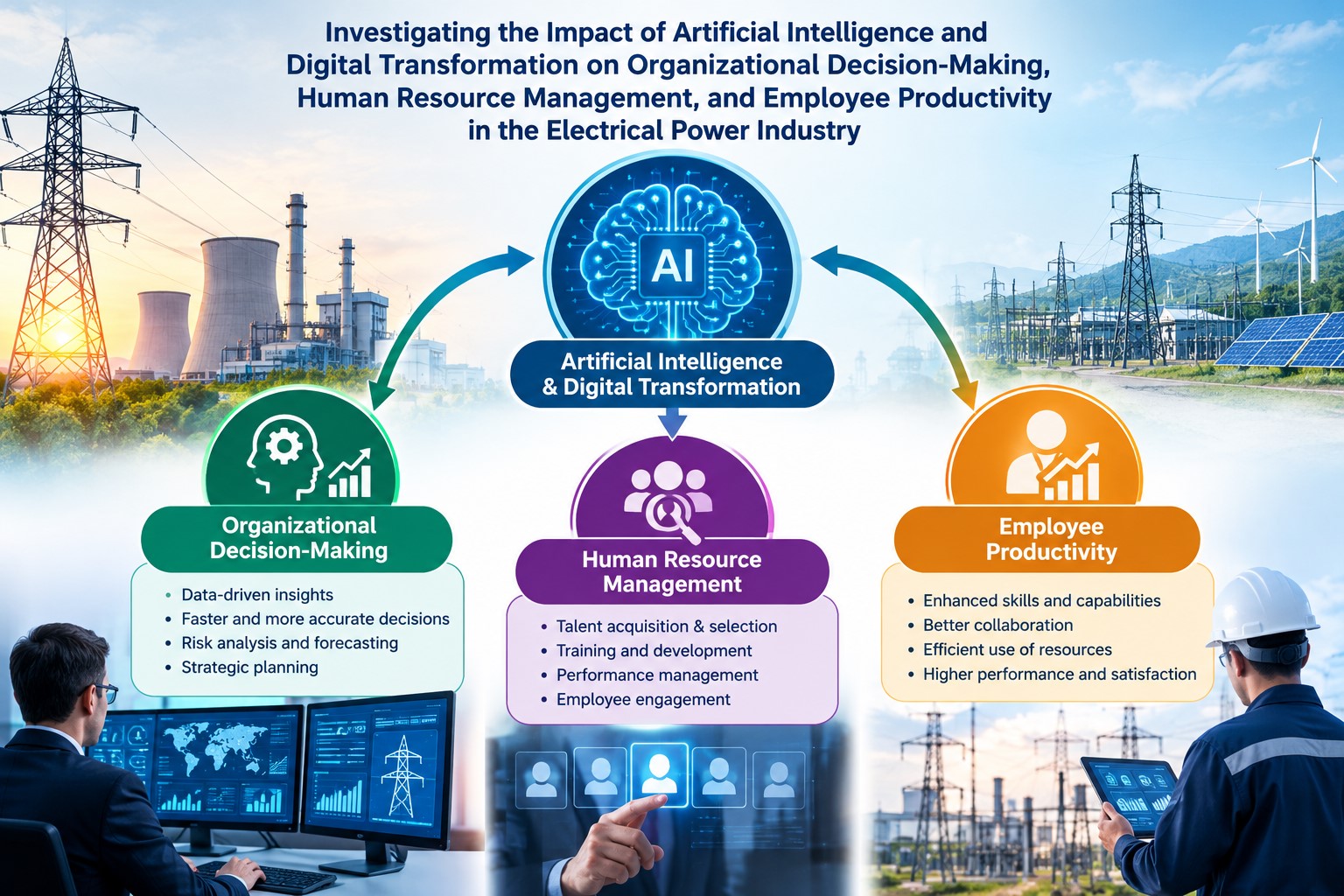
Background: Electrical power organizations are adopting artificial intelligence (AI), digital twins, advanced analytics, and workflow automation while facing aging infrastructure, changing load patterns, scarce specialist labor, and strict reliability obligations. Objective: This article investigates how AI-enabled digital transformation relates to organizational decision-making, human resource management (HRM), and employee productivity in electricity generation, transmission, distribution, and utility support functions. Methods: An integrative, structured narrative review of identifiable 2024–2026 peer-reviewed studies and reports from recognized research and standards organizations was undertaken. A cross-domain evidence matrix aligned operational use cases with organizational mechanisms, workforce outcomes, and assurance requirements. No primary interviews, experiments, or utility microdata were collected; thus no causal effect estimates are claimed. Results: The evidence supports a contingent model in which improved data availability and predictive capability can accelerate routine decisions, prioritize asset work, and support forecasting, whereas gains in human productivity depend on role redesign, training, trust, interoperability, and oversight. Benefits differ materially between office-based knowledge work and physically performed grid tasks. Algorithmic HRM creates opportunities for workforce planning and skill development but can also magnify bias, surveillance, opacity, and stress. Conclusion: Digital transformation is better understood as a jointly technical and organizational capability than as software deployment. A staged, human-accountable governance architecture and a multidimensional evaluation scorecard are proposed for future empirical testing.
[18]Designing digitally enabled proactive maintenance systems in power distribution grids: A scoping literature review. (2024). Energy Reports, 12, 1-21.
[26]Does leading through algorithmic management impact the workers’ well-being: A systematic literature review and research agenda. (2025). Leadership & Organization Development Journal, 47(2), 218-242.
Shishehbori, M. (2026). Investigating the Impact of Artificial Intelligence and Digital Transformation on Organizational Decision-Making, Human Resource Management, and Employee Productivity in the Electrical Power Industry. Advanced Journal of Management, Humanity and Social Science, 2(5), 472–497. https://doi.org/10.5281/zenodo.23841348
MLA
Shishehbori, M. "Investigating the Impact of Artificial Intelligence and Digital Transformation on Organizational Decision-Making, Human Resource Management, and Employee Productivity in the Electrical Power Industry", Advanced Journal of Management, Humanity and Social Science, 2, 5, 2026, 472–497. doi: 10.5281/zenodo.23841348
HARVARD
Shishehbori, M. (2026). 'Investigating the Impact of Artificial Intelligence and Digital Transformation on Organizational Decision-Making, Human Resource Management, and Employee Productivity in the Electrical Power Industry', Advanced Journal of Management, Humanity and Social Science, 2(5), pp. 472–497. doi: 10.5281/zenodo.23841348
CHICAGO
Shishehbori, M., "Investigating the Impact of Artificial Intelligence and Digital Transformation on Organizational Decision-Making, Human Resource Management, and Employee Productivity in the Electrical Power Industry." Advanced Journal of Management, Humanity and Social Science, 2 5 (2026): 472–497, doi: 10.5281/zenodo.23841348
VANCOUVER
Shishehbori M. Investigating the Impact of Artificial Intelligence and Digital Transformation on Organizational Decision-Making, Human Resource Management, and Employee Productivity in the Electrical Power Industry. Advanced Journal of Management, Humanity and Social Science. 2026;2(5):472–497. doi: 10.5281/zenodo.23841348